Physical Address
304 North Cardinal St.
Dorchester Center, MA 02124
Physical Address
304 North Cardinal St.
Dorchester Center, MA 02124

Everything about electronics
Everything about electronics
function calcule2(){
var i=0; for (i=0;i<= 5;i++) {calcule();}}
function calcule(){
Excel2Html.I19.value=(parseFloat(Excel2Html.I15.value)-(parseFloat(Excel2Html.I16.value)*parseFloat(Excel2Html.I17.value)))/(parseFloat(Excel2Html.I18.value)/1000) ;
Excel2Html.I20.value=(Math.round(((parseFloat(Excel2Html.I18.value)/1000)*(parseFloat(Excel2Html.I18.value)/1000)*parseFloat(Excel2Html.I19.value))* 10000))/ 10000 ;
}
LEDs (Light Emitting Diodes) require a series resistor to limit the current flowing through them. Without a resistor, the LED can draw too much current from the power supply, potentially damaging or destroying it.
Why is a Series Resistor Necessary?
LEDs have a low forward voltage: Typically, LEDs drop a fixed voltage (e.g., 2V for red, 3V for blue) when forward-biased. Unlike resistors, they do not limit current naturally.
Excess current can damage the LED: LEDs are designed to operate within a specific current range (typically 10-20mA). If the current exceeds this, it can overheat and destroy the LED.
Controlling current: The series resistor ensures that the current through the LED is kept within safe limits, preventing it from burning out.
The below calculator calculates the quick value of resistor for the circuit.
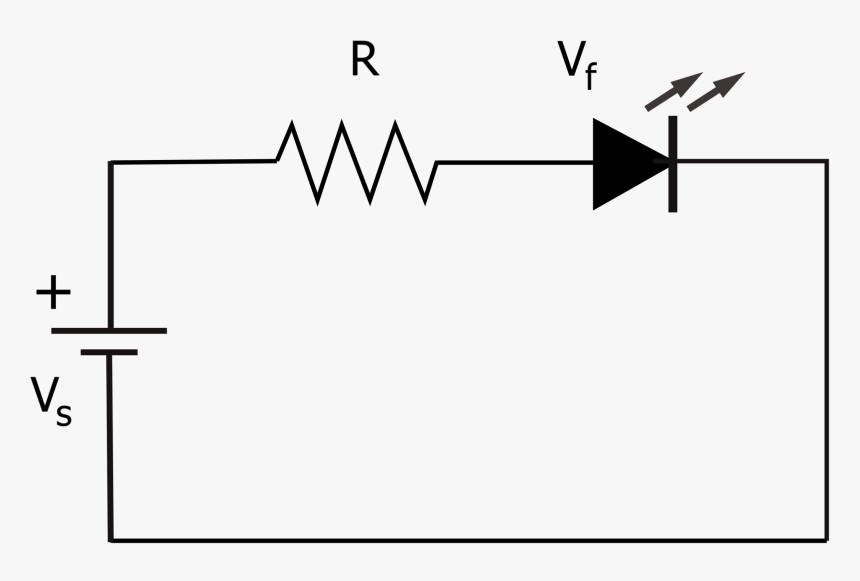
| Parameters | Values | Unit |
| Source Voltage | V | |
| LED forward drop | V | |
| Number of LEDs | Nos | |
| Required LED current | mA | |
| Resistance | Ohm | |
| Resistance Power dissipation | W |
(adsbygoogle = window.adsbygoogle || []).push({});